
Core Testing – Pyrrhotite
CONNECTICUT / MASSACHUSETTSTesting Concrete for Pyrrhotite
As one of the pioneers involved in the crumbling foundations crisis since 2013, Sedexlab has performed Core Testing of more than 2000 concrete core samples removed from residential foundations at risk with pyrrhotite-induced deterioration in Canada, Massachusetts, and Connecticut.
We provide a rapid and affordable petrographic analysis that allows us to quantify the mineral pyrrhotite in concentrations as low as 0.1% in concrete rock aggregates by combining the use of sulfur analysis and polarized light microscopy. Our experienced petrographers are Certified Professional Geologists specialized in identifying pyrrhotite and other deleterious sulfide minerals using internationally recognized testing standards and methods.
All costs related to our core testing are eligible for the CRCOG Connecticut Crumbling Foundations Testing Reimbursement Program (50% reimbursed) and the Massachusetts Crumbling Foundation Testing Reimbursement Program (75% reimbursed).
WHO REQUIRES TESTING AND WHY?
- Concrete foundations poured between 1983-2015 for homes, additions, detached garages, and businesses in northeastern Connecticut and South Central Massachusetts within the presumed radii of operations of the now defunct J.J. Mottes Concrete Company (see map of radii).
- Concrete foundations located in Central Massachusetts Worcester County north of Turnpike I-90 where recent testing has revealed potential sources of pyrrhotite-bearing rock aggregates other than Becker’s Quarry in Connecticut.
- Foundations where professional visual inspections were carried out and could not determine if pyrrhotite was a problem or not since no significant visual indications commonly associated with pyrrhotite-induced deterioration were present at the time of the inspection.
- Property owners who have noticed suspect ”map cracking” in their foundation and/or who are located in an area where pyrrhotite-related problems have been confirmed.
- Home owners looking to sell and who are requiring testing to prepare for potential buyers.
- Potential home buyers asking for foundation testing before a transaction.
- Property owners looking to reduce property taxes due to foundation impairment.
- Connecticut home owners filing claims for foundation replacement with the Connecticut Foundation Solutions Indemnity Company (CFSIC).
INCLUDES
Two (2) concrete core extractions from the foundation
AND
Laboratory analysis of two (2) concrete core samples
TESTING REIMBURSEMENT PROGRAMS
All costs are eligible for the Connecticut CRCOG testing reimbursement program. (50% reimbursed)
and the Massachusetts Crumbling Foundation Testing Reimbursement Program (75% reimbursed)
TURNAROUND TIME
Results and report are produced within :
10-14 days
(after receiving the samples)
The PDF analysis report is sent via email to the purchaser and/or approved representative(s).
FAST CORE SAMPLING
- A qualified field technician will be on site for sample collection within 2-3 days following initial contact.
- On-site, the technician will securely identify and package the core samples for shipment to our lab.
REPORTS WRITTEN IN LAYPERSON’S TERMS DESCRIBING:
- Presence (or absence) of the mineral pyrrhotite in concrete coarse aggregates.
- Pyrrhotite concentration (percentage) expressed in weight of coarse aggregate.
- Sulfur concentration in coarse aggregates benchmarked against the 0.1% threshold limit if pyrrhotite is present as stated in standard EN 12620.
- Summary of results and analytic observations.
- Concluding statements with professional judgment.
- Petrographic photographs of concrete sections
- Detailed calculation methodology.
- Petrographic examinations conducted in accordance with relevant guidelines outlined in ASTM C856 Standard Practice for Petrographic Examination of Hardened Concrete.
All reports are signed by a Certified Professional Geologist
Our Work Process
A qualified field technician will be on-site within 2-3 days after initial contact to perform the core sampling work.
- A minimum of two (2) core samples are extracted from two different foundation walls per standard-size residential building or outbuilding. (Addition/detached garage foundations require to be tested and reported independently from the main building given that the concrete was placed at different times and/or circumstances).
- The samples are drilled out of a 4-inch diameter cylinder (the typical specimen used for the petrographic examination is a 3¾ to 4 in. diameter core).
- When sampling is done from the basement, core drilling is executed all the way through the wall to confirm the presence or absence of waterproofing on the exterior surface of the foundation.
- Core samples are physically labeled and documented (chain of custody form) regarding the location of sample collection from the concrete foundation with control numbers matching written report.
- Cores are securely identified, sealed and packaged for an immediate shipment to our lab.
- Resulting cavities are filled with high quality non-shrink grout.
- Reasonable access must be provided prior to technician’s arrival . Example: Moving furniture / home decor / rugs, etc.
Since pyrrhotite is a sulfide mineral composed of iron (Fe) and sulfur (S), measuring sulfur concentration in the coarse aggregate is a critical part of the Concrete Core Analysis. A high correlation exists between sulfur concentration and pyrrhotite concentration in rock aggregates. The correlation is even higher in CT and MA rock aggregates known for their high pyrrhotite proportion relative to other sulfide minerals such as pyrite, chalcopyrite, pentlandite, etc. In general terms, high sulfur concentrations indicate high pyrrhotite concentrations in CT and MA rock aggregates. Inversely, low sulfur indicates low pyrrhotite.
THE 0.1% STANDARD
European standard EN 12620 has placed a sulfur concentration limit in coarse aggregate if it is to be used in concrete. The standard states that the sulfur concentration must not exceed 0.1% in weight of coarse aggregate if pyrrhotite is present. The US Army Corps of Engineers has also recently put out similar recommendations.
Methodology
Total sulfur in concrete analysis is performed using LECO infrared combustion sulfur analysis in accordance with the relevant guidelines outlined in standard NQ 2560-500/2003, 6.2.1, A.2, A.3.2. and is carried out on a portion of each core sample as received by SEDEXLAB INC. (approx. 1000 grams). The LECO sulfur analysis provides sulfur concentrations by weight of concrete. These results are then converted to a sulfur concentration by weight of coarse aggregate.
Sedexlab petrographers perform the mineralogical and microstructural assessment of aggregates and concrete highlighting potential problems related to expansive reactions due to the oxidation of iron-sulfide minerals. The main objective of the petrographic examination is to identify and quantify the mineral pyrrhotite in the coarse aggregate.
From each received concrete core sample, a disk-shaped section is saw-cut and polished to a precise mirror-like finish. Our petrographers examine these polished sections under polarized light microscopes with the purpose of identifying pyrrhotite’s distinctive optical properties in reflected light. Approximately 100 coarse aggregate particles are screened for pyrrhotite in two polished sections combined with the purpose of determining pyrrhotite surface ratios relative to coarse aggregate particles. The pyrrhotite concentration is then derived from these surface ratios and from the previously calculated concentration of sulfur in the coarse aggregates. The result is an average concentration of pyrrhotite by weight of coarse aggregate (%w).
The Analysis includes:
- Concrete core descriptions (concrete condition, coarse and fine aggregate description, steel reinforcements, moisture barriers, etc.).
- Determination of percentage of coarse aggregate particles containing pyrrhotite.
- Determination of percentage of pyrrhotite per unit mass of coarse aggregate.
- Determination of evidence of oxidation of pyrrhotite (replacement iron oxides).
- Petrographic composition of coarse aggregate and fine aggregate.
- Composition of iron sulfide minerals in the coarse aggregate (pyrrhotite, pyrite, chalcopyrite, pentlandite, marcasite, etc.).
Petrographic examinations are conducted in accordance with relevant guidelines outlined in ASTM C 856, “Standard Practice for Petrographic Examination of Hardened Concrete.”
Our clients not only appreciate the thoroughness of our laboratory analysis, but they also value our ability to deliver the information accurately with a realistic perspective. Sedexlab’s Concrete Core Analysis report provides clarity in layperson’s terms to all parties involved.
Results are clearly presented and summarized in tables, bullet points, and graphs with concluding statements that reflect well-balanced and experience-based professional judgment. The well laid-out 9-page report includes a summary of results & analytic observations and comes complete with an appendix detailing petrographic examinations, core descriptions, chemical analysis, photographs, and calculation methodology.
The reports can be used for home disclosures, property tax relief, and claims to the captive insurance group for Connecticut homeowners (CFSIC).
Results and reports are produced 10-14 days from the time we receive the core samples. The PDF analysis report is sent via email to the purchaser and/or approved representative(s).
A qualified field technician will be on-site within 2-3 days after initial contact to perform the core sampling work.
- A minimum of two (2) core samples are extracted from two different foundation walls per standard-size residential building or outbuilding. (Addition/detached garage foundations require to be tested and reported independently from the main building given that the concrete was placed at different times and/or circumstances).
- The samples are drilled out of a 4-inch diameter cylinder (the typical specimen used for the petrographic examination is a 3¾ to 4 in. diameter core).
- When sampling is done from the basement, core drilling is executed all the way through the wall to confirm the presence or absence of waterproofing on the exterior surface of the foundation.
- Core samples are physically labeled and documented (chain of custody form) regarding the location of sample collection from the concrete foundation with control numbers matching written report.
- Cores are securely identified, sealed and packaged for an immediate shipment to our lab.
- Resulting cavities are filled with high quality non-shrink grout.
- Reasonable access must be provided prior to technician’s arrival . Example: Moving furniture / home decor / rugs, etc.
Since pyrrhotite is a sulfide mineral composed of iron (Fe) and sulfur (S), measuring sulfur concentration in the coarse aggregate is a critical part of the Concrete Core Analysis. A high correlation exists between sulfur concentration and pyrrhotite concentration in rock aggregates. The correlation is even higher in CT and MA rock aggregates known for their high pyrrhotite proportion relative to other sulfide minerals such as pyrite, chalcopyrite, pentlandite, etc. In general terms, high sulfur concentrations indicate high pyrrhotite concentrations in CT and MA rock aggregates. Inversely, low sulfur indicates low pyrrhotite.
THE 0.1% STANDARD
European standard EN 12620 has placed a sulfur concentration limit in coarse aggregate if it is to be used in concrete. The standard states that the sulfur concentration must not exceed 0.1% in weight of coarse aggregate if pyrrhotite is present. The US Army Corps of Engineers has also recently put out similar recommendations.
Methodology
Total sulfur in concrete analysis is performed using LECO infrared combustion sulfur analysis in accordance with the relevant guidelines outlined in standard NQ 2560-500/2003, 6.2.1, A.2, A.3.2. and is carried out on a portion of each core sample as received by SEDEXLAB INC. (approx. 1000 grams). The LECO sulfur analysis provides sulfur concentrations by weight of concrete. These results are then converted to a sulfur concentration by weight of coarse aggregate.
Sedexlab petrographers perform the mineralogical and microstructural assessment of aggregates and concrete highlighting potential problems related to expansive reactions due to the oxidation of iron-sulfide minerals. The main objective of the petrographic examination is to identify and quantify the mineral pyrrhotite in the coarse aggregate.
From each received concrete core sample, a disk-shaped section is saw-cut and polished to a precise mirror-like finish. Our petrographers examine these polished sections under polarized light microscopes with the purpose of identifying pyrrhotite’s distinctive optical properties in reflected light. Approximately 100 coarse aggregate particles are screened for pyrrhotite in two polished sections combined with the purpose of determining pyrrhotite surface ratios relative to coarse aggregate particles. The pyrrhotite concentration is then derived from these surface ratios and from the previously calculated concentration of sulfur in the coarse aggregates. The result is an average concentration of pyrrhotite by weight of coarse aggregate (%w).
The Analysis includes:
- Concrete core descriptions (concrete condition, coarse and fine aggregate description, steel reinforcements, moisture barriers, etc.).
- Determination of percentage of coarse aggregate particles containing pyrrhotite.
- Determination of percentage of pyrrhotite per unit mass of coarse aggregate.
- Determination of evidence of oxidation of pyrrhotite (replacement iron oxides).
- Petrographic composition of coarse aggregate and fine aggregate.
- Composition of iron sulfide minerals in the coarse aggregate (pyrrhotite, pyrite, chalcopyrite, pentlandite, marcasite, etc.).
Petrographic examinations are conducted in accordance with relevant guidelines outlined in ASTM C 856, “Standard Practice for Petrographic Examination of Hardened Concrete.”
Our clients not only appreciate the thoroughness of our laboratory analysis, but they also value our ability to deliver the information accurately with a realistic perspective. Sedexlab’s Concrete Core Analysis report provides clarity in layperson’s terms to all parties involved.
Results are clearly presented and summarized in tables, bullet points, and graphs with concluding statements that reflect well-balanced and experience-based professional judgment. The well laid-out 9-page report includes a summary of results & analytic observations and comes complete with an appendix detailing petrographic examinations, core descriptions, chemical analysis, photographs, and calculation methodology.
The reports can be used for home disclosures, property tax relief, and claims to the captive insurance group for Connecticut homeowners (CFSIC).
Results and reports are produced 10-14 days from the time we receive the core samples. The PDF analysis report is sent via email to the purchaser and/or approved representative(s).
Background Q & A
Pyrrhotite is a naturally occurring iron sulfide mineral commonly found in regional rock formations. Untested rock aggregates were extensively mined out of these rock formations and were widely distributed, for years and even decades to regional concrete producers.
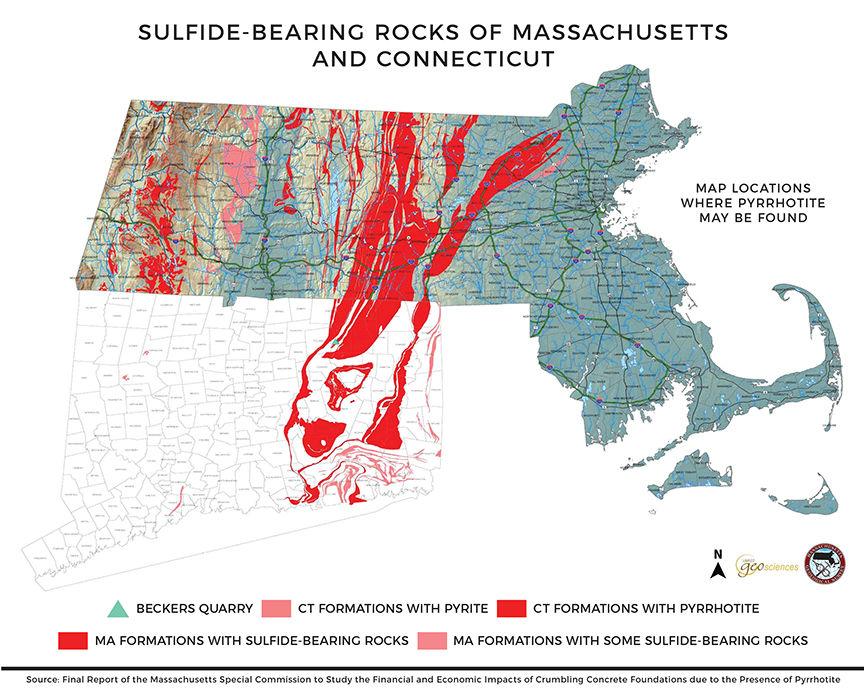
These pyrrhotite-containing aggregates are the probable cause of the premature deterioration of residential concrete foundations reported in many cities and towns in Massachusetts and Connecticut.
When exposed to water and air, pyrrhotite particles in rock aggregates break down to form acidic-, iron-, and sulfate-rich by-products that are larger in size. This expansion initiates distress and cracking in the concrete, providing more pathways for water and air to penetrate and react with more pyrrhotite-bearing aggregates. This compounding expansive reaction can eventually lead to a loss of concrete structural integrity. The problems, sometimes developing within the first 10 years, often begin to appear after 15 to 20 years or more.
According to the Geological Society of America, rock aggregate in the failing concrete foundations in CT and South Central MA was largely mined from a single quarry in Willington (CT), within a stratified metamorphic unit mapped as Ordovician Brimfield Schist.
The Known Source; Becker’s Quarry & J.J. Mottes Concrete Plant
Pyrrhotite-bearing rock aggregates identified in the crumbling concrete foundations in Connecticut and Southern Massachusetts originated from Becker’s Quarry in Willington, CT. The Quarry was affiliated with the now-defunct JJ Mottes Concrete Company.
The laced concrete was poured from 1983 to 2015 by JJ Mottes who at the time operated a concrete manufacturing plant in Stafford Springs, only a few miles from Becker’s Quarry. A state commission had determined that approximately 95,000 homes were built during that time span within a 50-mile radius of the plant, but the exact number of projects J.J. Mottes supplied concrete for is unknown because of a lack of documentation. The Special Commission had determined that those who are located within 20 miles of the plant are the most at-risk.
The economic and social impacts on the region are immense. Officials have already identified approximately 40 cities and towns in CT affected by pyrrhotite-laced foundations while 35 have been identified in MA so far. Officials in MA have no clear idea of how many homes are affected but one estimate used by CT officials says that 10,000 homes may potentially be affected in MA.
Other unconfirmed Source(s) in Central MA
MA Authorities express real concern that other producers of deleterious aggregate may exist in their State and may have unknowingly supplied the aggregate to regional concrete producers. Recent testing has identified pyrrhotite-laced foundations, outside the presumed radii of operations of JJ Mottes, well north of MA Turnpike I-90 in Central MA. Indeed, petrographic examinations have revealed that these pyrrhotite-bearing aggregates differ significantly in nature from those produced at Becker’s quarry in CT suggesting that these rocks were mined out of at least one other quarry presumably located in Worcester County. Unfortunately, many questions are still unanswered concerning the extent and the time period of the distribution.
Not officially.
Although the undesirable nature of pyrrhotite in concrete is well known, there is no precise value issued to this date, by any U.S. State or Federal laws, as to the maximum authorized pyrrhotite concentration in coarse aggregate if it is to be used in concrete.
However, concentrations of around 0.3% pyrrhotite by weight of coarse aggregate have been reported to represent the minimum levels linked to visual indications commonly associated with pyrrhotite-laced concrete. Our own case history data as well as information shared by some of our peers in Canada and the U.S. lend support to the validity of such levels. Is 0.3% pyrrhotite by weight of coarse aggregate the threshold limit above which it is unsafe? Unfortunately, until more research and case history data reveal with more accuracy the minimum level, this question remains unanswered.
A ”trace” of pyrrhotite and the 0.1% sulfur standard
SEDEXLAB defines a ”trace” as a non-deleterious amount of pyrrhotite in concrete coarse aggregates. SEDEXLAB and most international experts refer to the ”0.1% sulfur standard” described in aggregate standard EN 12620. The internationally recognized standard states that coarse aggregate with a sulfur concentration that does not exceed 0.1% in weight meets the standard’s acceptability requirements for the aggregate’s use in concrete even if some pyrrhotite is present. These very small sulfur levels reflect negligible amounts of pyrrhotite which are visually confirmed by our petrographers when performing petrographic examinations using reflected light microscopy.
To this date, of all the core samples we tested since 2013 that contained a trace of pyrrhotite (sulfur not exceeding 0.1%), none have presented any notable deterioration commonly associated with pyrrhotite oxidation.
Here are the main telltale signs of premature deterioration of foundation walls caused by pyrrhotite-induced expansive reactions in concrete:

Intersecting cracks that extend in depth that vary in width from fine and barely visible to open and well-defined. These cracks are the prime indicator of pyrrhotite-related distress.

Horizontal cracks will generally move along a wall, to the connecting wall, compromising a wide span of your foundation area of support. These cracks are generally more serious in nature and require immediate professional inspection whether they are pyrrhotite-related or not.
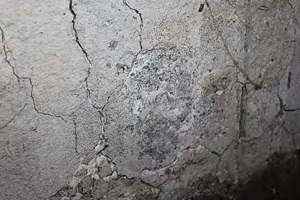
Spalling concrete is a problem where part of the surface peels, breaks, or chips away. Also known as scaling, it is the result of a weak surface that is susceptible to damage.
- Bowing walls
Noticeable inward movement of a concrete wall, often associated with horizontal cracking and requiring immediate professional inspection.
- Rust-like staining on the surface of the walls.
- Efflorescence (whitish powder) in the vicinity of the cracking surface
Ongoing Monitoring of Concrete Foundations
We recommend the use of photographs as well as a written log to monitor the progress of deterioration. We suggest marking and measuring methods to monitor how the cracks expand. For example, a standard crack gauge may be used to accomplish this task.
Although certain measures may mitigate to some extent the risk of future concrete expansion, at present no measure other than foundation replacement is known to reverse or eliminate pyrrhotite-Induced concrete deterioration.
- Sealing Cracks
Cracks allow moisture and air to penetrate the concrete and might accelerate any potential reactions. Fill in cracks with a concrete repair product or a flexible polymer sealant. If the cracks are still active, a flexible sealant will work better than a rigid one.
- Reducing Ground Level Humidity
Surface drainage should be the first line of defense in every residential moisture protection system. Groundwater can be controlled to a great extent by reducing the rate at which rainwater and surface runoff enter the soil adjacent to a building. Roofs typically concentrate collected rainwater at a building’s perimeter where it can cause groundwater problems. Water that is drained quickly away from a building at the ground surface cannot enter the soil and contribute to below-grade moisture problems.
Ground-level humidity can be reduced by:
- Repositioning gutter spouts to divert water away from the foundations.
- Modifying the slope of the ground around the foundations.
- Sealing the asphalt covering at foundation joints.
- Planting beds located next to the building walls should always be well-drained to avoid concentrating moisture along the foundation line.
- French Drain
Subsurface drainage systems can collect and divert groundwater away from the walls and floor of a basement. The most common method of keeping groundwater away from basement structures is to provide a perimeter drain or footing drain (French drain) in the form of perforated, porous, or open-jointed pipe at the level of the footings. Perimeter drains artificially lower the water table below the elevation of the floor. Crushed stone or gravel should always be placed above and below perimeter drains to facilitate water flow.
When possible, the existing French drain should be assessed to verify proper functioning. This drain can gradually block after a long period of time.
- Waterproofing Membranes
Waterproofing is the treatment of a surface or structure to prevent the passage of liquid water under hydrostatic pressure. When combined with effective subsurface drainage, a waterproofing membrane can provide good performance. In wet climates, or on sites with high water tables, fluctuating water tables, or poor drainage, a waterproofing membrane should be used in addition to subsurface drains
Since pyrrhotite is a rock aggregate problem, our concrete analysis focuses on identifying and quantifying pyrrhotite relative to the coarse aggregate, one of the components of concrete mix.
Sedexlab conducts a series of independent laboratory procedures of which two (2) represent the bulk of the analysis.
1) Sulfur Analysis – Determination of the concentration of sulfur in the coarse aggregate
2) Petrographic Examination – Determination of the presence (or absence) of pyrrhotite and determination of its concentration in the coarse aggregate.
- Sulfur Analysis
Since pyrrhotite is a sulfide mineral composed of iron (Fe) and sulfur (S), measuring sulfur concentration in the coarse aggregate is a critical part of the Concrete Core Analysis. A high correlation exists between sulfur concentration and pyrrhotite concentration in rock aggregates. The correlation is even higher in CT and MA rock aggregates known for their high pyrrhotite proportion relative to other sulfide minerals such as pyrite, chalcopyrite, pentlandite, etc. In general terms, a high sulfur concentration will indicate a high pyrrhotite concentration for CT and MA rock aggregates.
From each received core sample, approximately 1000 grams of concrete are submitted for a total sulfur analysis using LECO infrared combustion which provides the concentration of sulfur by weight of concrete. The results obtained are then converted to a concentration of sulfur by weight of coarse aggregate.
The 0.1% Standard
European aggregate standard EN 12620 has placed a sulfur concentration limit if the coarse aggregate is to be used in concrete. According to the standard, the sulfur concentration must not exceed 0.1% in weight of coarse aggregate if pyrrhotite is present. The US Army Corps of Engineers has also recently put out similar recommendations.
- Petrographic Examination
The main objective of the petrographic examination is to identify and quantify pyrrhotite in the coarse aggregate. The analysis also allows for identifying the evidence of pyrrhotite-induced expansive reactions such as pyrrhotite oxidation and replacement iron oxides (secondary minerals).
From each received concrete core sample, a disk-shaped section is saw-cut and polished to a precise mirror-like finish. Our petrographers examine these polished sections under polarized light microscopes with the purpose of identifying pyrrhotite’s distinctive optical properties in reflected light.
Approximately 100 coarse aggregate particles are screened for pyrrhotite in two polished sections combined with the purpose of determining pyrrhotite surface ratios relative to coarse aggregate particles. The pyrrhotite concentration is then derived from these surface ratios and from the previously calculated concentration of sulfur in the coarse aggregates. The result is an average concentration of pyrrhotite by weight of coarse aggregate (%w).
Pyrrhotite is a naturally occurring iron sulfide mineral commonly found in regional rock formations. Untested rock aggregates were extensively mined out of these rock formations and were widely distributed, for years and even decades to regional concrete producers.
These pyrrhotite-containing aggregates are the probable cause of the premature deterioration of residential concrete foundations reported in many cities and towns in Massachusetts and Connecticut.
When exposed to water and air, pyrrhotite particles in rock aggregates break down to form acidic-, iron-, and sulfate-rich by-products that are larger in size. This expansion initiates distress and cracking in the concrete, providing more pathways for water and air to penetrate and react with more pyrrhotite-bearing aggregates. This compounding expansive reaction can eventually lead to a loss of concrete structural integrity. The problems, sometimes developing within the first 10 years, often begin to appear after 15 to 20 years or more.
According to the Geological Society of America, rock aggregate in the failing concrete foundations in CT and South Central MA was largely mined from a single quarry in Willington (CT), within a stratified metamorphic unit mapped as Ordovician Brimfield Schist.
The Known Source; Becker’s Quarry & J.J. Mottes Concrete Plant
Pyrrhotite-bearing rock aggregates identified in the crumbling concrete foundations in Connecticut and Southern Massachusetts originated from Becker’s Quarry in Willington, CT. The Quarry was affiliated with the now-defunct JJ Mottes Concrete Company.
The laced concrete was poured from 1983 to 2015 by JJ Mottes who at the time operated a concrete manufacturing plant in Stafford Springs, only a few miles from Becker’s Quarry. A state commission had determined that approximately 95,000 homes were built during that time span within a 50-mile radius of the plant, but the exact number of projects J.J. Mottes supplied concrete for is unknown because of a lack of documentation. The Special Commission had determined that those who are located within 20 miles of the plant are the most at-risk.
The economic and social impacts on the region are immense. Officials have already identified approximately 40 cities and towns in CT affected by pyrrhotite-laced foundations while 35 have been identified in MA so far. Officials in MA have no clear idea of how many homes are affected but one estimate used by CT officials says that 10,000 homes may potentially be affected in MA.
Other unconfirmed Source(s) in Central MA
MA Authorities express real concern that other producers of deleterious aggregate may exist in their State and may have unknowingly supplied the aggregate to regional concrete producers. Recent testing has identified pyrrhotite-laced foundations, outside the presumed radii of operations of JJ Mottes, well north of MA Turnpike I-90 in Central MA. Indeed, petrographic examinations have revealed that these pyrrhotite-bearing aggregates differ significantly in nature from those produced at Becker’s quarry in CT suggesting that these rocks were mined out of at least one other quarry presumably located in Worcester County. Unfortunately, many questions are still unanswered concerning the extent and the time period of the distribution.
Not officially.
Although the undesirable nature of pyrrhotite in concrete is well known, there is no precise value issued to this date, by any U.S. State or Federal laws, as to the maximum authorized pyrrhotite concentration in coarse aggregate if it is to be used in concrete.
However, concentrations of around 0.3% pyrrhotite by weight of coarse aggregate have been reported to represent the minimum levels linked to visual indications commonly associated with pyrrhotite-laced concrete. Our own case history data as well as information shared by some of our peers in Canada and the U.S. lend support to the validity of such levels. Is 0.3% pyrrhotite by weight of coarse aggregate the threshold limit above which it is unsafe? Unfortunately, until more research and case history data reveal with more accuracy the minimum level, this question remains unanswered.
A ”trace” of pyrrhotite and the 0.1% sulfur standard
SEDEXLAB defines a ”trace” as a non-deleterious amount of pyrrhotite in concrete coarse aggregates. SEDEXLAB and most international experts refer to the ”0.1% sulfur standard” described in aggregate standard EN 12620. The internationally recognized standard states that coarse aggregate with a sulfur concentration that does not exceed 0.1% in weight meets the standard’s acceptability requirements for the aggregate’s use in concrete even if some pyrrhotite is present. These very small sulfur levels reflect negligible amounts of pyrrhotite which are visually confirmed by our petrographers when performing petrographic examinations using reflected light microscopy.
To this date, of all the core samples we tested since 2013 that contained a trace of pyrrhotite (sulfur not exceeding 0.1%), none have presented any notable deterioration commonly associated with pyrrhotite oxidation.
Here are the main telltale signs of premature deterioration of foundation walls caused by pyrrhotite-induced expansive reactions in concrete:
Intersecting cracks that extend in depth that vary in width from fine and barely visible to open and well-defined. These cracks are the prime indicator of pyrrhotite-related distress.
Horizontal cracks will generally move along a wall, to the connecting wall, compromising a wide span of your foundation area of support. These cracks are generally more serious in nature and require immediate professional inspection whether they are pyrrhotite-related or not.
Spalling concrete is a problem where part of the surface peels, breaks, or chips away. Also known as scaling, it is the result of a weak surface that is susceptible to damage.
- Bowing walls
Noticeable inward movement of a concrete wall, often associated with horizontal cracking and requiring immediate professional inspection.
- Rust-like staining on the surface of the walls.
- Efflorescence (whitish powder) in the vicinity of the cracking surface
Ongoing Monitoring of Concrete Foundations
We recommend the use of photographs as well as a written log to monitor the progress of deterioration. We suggest marking and measuring methods to monitor how the cracks expand. For example, a standard crack gauge may be used to accomplish this task.
Although certain measures may mitigate to some extent the risk of future concrete expansion, at present no measure other than foundation replacement is known to reverse or eliminate pyrrhotite-Induced concrete deterioration.
- Sealing Cracks
Cracks allow moisture and air to penetrate the concrete and might accelerate any potential reactions. Fill in cracks with a concrete repair product or a flexible polymer sealant. If the cracks are still active, a flexible sealant will work better than a rigid one.
- Reducing Ground Level Humidity
Surface drainage should be the first line of defense in every residential moisture protection system. Groundwater can be controlled to a great extent by reducing the rate at which rainwater and surface runoff enter the soil adjacent to a building. Roofs typically concentrate collected rainwater at a building’s perimeter where it can cause groundwater problems. Water that is drained quickly away from a building at the ground surface cannot enter the soil and contribute to below-grade moisture problems.
Ground-level humidity can be reduced by:
- Repositioning gutter spouts to divert water away from the foundations.
- Modifying the slope of the ground around the foundations.
- Sealing the asphalt covering at foundation joints.
- Planting beds located next to the building walls should always be well-drained to avoid concentrating moisture along the foundation line.
- French Drain
Subsurface drainage systems can collect and divert groundwater away from the walls and floor of a basement. The most common method of keeping groundwater away from basement structures is to provide a perimeter drain or footing drain (French drain) in the form of perforated, porous, or open-jointed pipe at the level of the footings. Perimeter drains artificially lower the water table below the elevation of the floor. Crushed stone or gravel should always be placed above and below perimeter drains to facilitate water flow.
When possible, the existing French drain should be assessed to verify proper functioning. This drain can gradually block after a long period of time.
- Waterproofing Membranes
Waterproofing is the treatment of a surface or structure to prevent the passage of liquid water under hydrostatic pressure. When combined with effective subsurface drainage, a waterproofing membrane can provide good performance. In wet climates, or on sites with high water tables, fluctuating water tables, or poor drainage, a waterproofing membrane should be used in addition to subsurface drains
Since pyrrhotite is a rock aggregate problem, our concrete analysis focuses on identifying and quantifying pyrrhotite relative to the coarse aggregate, one of the components of concrete mix.
Sedexlab conducts a series of independent laboratory procedures of which two (2) represent the bulk of the analysis.
1) Sulfur Analysis – Determination of the concentration of sulfur in the coarse aggregate
2) Petrographic Examination – Determination of the presence (or absence) of pyrrhotite and determination of its concentration in the coarse aggregate.
- Sulfur Analysis
Since pyrrhotite is a sulfide mineral composed of iron (Fe) and sulfur (S), measuring sulfur concentration in the coarse aggregate is a critical part of the Concrete Core Analysis. A high correlation exists between sulfur concentration and pyrrhotite concentration in rock aggregates. The correlation is even higher in CT and MA rock aggregates known for their high pyrrhotite proportion relative to other sulfide minerals such as pyrite, chalcopyrite, pentlandite, etc. In general terms, a high sulfur concentration will indicate a high pyrrhotite concentration for CT and MA rock aggregates.
From each received core sample, approximately 1000 grams of concrete are submitted for a total sulfur analysis using LECO infrared combustion which provides the concentration of sulfur by weight of concrete. The results obtained are then converted to a concentration of sulfur by weight of coarse aggregate.
The 0.1% Standard
European aggregate standard EN 12620 has placed a sulfur concentration limit if the coarse aggregate is to be used in concrete. According to the standard, the sulfur concentration must not exceed 0.1% in weight of coarse aggregate if pyrrhotite is present. The US Army Corps of Engineers has also recently put out similar recommendations.
- Petrographic Examination
The main objective of the petrographic examination is to identify and quantify pyrrhotite in the coarse aggregate. The analysis also allows for identifying the evidence of pyrrhotite-induced expansive reactions such as pyrrhotite oxidation and replacement iron oxides (secondary minerals).
From each received concrete core sample, a disk-shaped section is saw-cut and polished to a precise mirror-like finish. Our petrographers examine these polished sections under polarized light microscopes with the purpose of identifying pyrrhotite’s distinctive optical properties in reflected light.
Approximately 100 coarse aggregate particles are screened for pyrrhotite in two polished sections combined with the purpose of determining pyrrhotite surface ratios relative to coarse aggregate particles. The pyrrhotite concentration is then derived from these surface ratios and from the previously calculated concentration of sulfur in the coarse aggregates. The result is an average concentration of pyrrhotite by weight of coarse aggregate (%w).
What is an Environmental Site Assessment?
The environmental site assessment (ESA) is an essential tool for financial institutions, landlords as well as for site buyers in the context of real estate transactions, the refinancing of a property or a real estate development project. The ESA can detect signs of potential and existing contamination on a property and assess the associated environmental risks. An ESA will determine whether contamination issues exist before you buy, and help you avoid unpleasant and costly surprises down the road.
Environmental Site Assessment Phases
The Phase I ESA is a non-intrusive historical investigation revealing past activities at and around the site, and may suggest certain areas of the site may be contaminated.
- Historical research of the site and identification of present activities
- Visit and visual inspection of the site with photos taken
- Informal interviews with the parties involved
- Methodology used in accordance with the requirements of Standard CSA Z768-01
- If the Phase 1 assessment identifies potential for contamination, the recommendations will state to move on to a Phase 2 ESA with preliminary intrusive site characterization (soil and groundwater testing)
- All of our interventions are supported by a team of qualified environmental professionals
A Phase 2 Environmental Site Assessment (ESA) is the first intrusive step in site characterization. The purpose is to confirm, or to demonstrate the absence of, contamination. A Phase II ESA involves intrusive testing procedures such as sampling and laboratory analysis.
- Site visit and establishment of a preliminary soil and groundwater characterization program
- Exploratory soil drilling and/or test pitting
- Soil and groundwater samplings and laboratory chemical analyzes
- Analytical parameters defined according to the type of contamination and the existing or apprehended risks.
- The results obtained are compared to criteria A, B and C of the Ministère de l’Environnement et de la Lutte contre les Changements Climatiques (MELCC).
- Methodology used in accordance with the requirements of Standard CSA-Z769-00
- If the study reveals contamination that exceeds the limits of the criteria of the MELCC, the recommendations will state to move to a comprehensive intrusive site characterization (Phase 3 ESA).
- All of our interventions are supported by a team of qualified environmental professionals as well as certified laboratories
A comprehensive Phase 3 ESA includes extensive sampling to fully characterize the extent of contamination, in area and depth, so that cleanup costs can be estimated.
- Additional exploratory soil drilling and/or test pitting
- Additional soil and groundwater samplings and laboratory chemical analyzes
- Sampling carried out according to the source of the contamination, the type of contaminant, the potential migration pathways, the different mechanisms of pollutant dispersion, as well as the characteristics of potential receptors.
- Additional analyzes on samples already taken during the Phase 2 ESA.
- Methodology used in accordance with the requirements of the standard of the Ministère de l’Environnement et de la Lutte contre les Changements Climatiques (MELCC).
- All our interventions are supported by a team of qualified environmental professionals as well as certified laboratories
The Phase I ESA is a non-intrusive historical investigation revealing past activities at and around the site, and may suggest certain areas of the site may be contaminated.
- Historical research of the site and identification of present activities
- Visit and visual inspection of the site with photos taken
- Informal interviews with the parties involved
- Methodology used in accordance with the requirements of Standard CSA Z768-01
- If the Phase 1 assessment identifies potential for contamination, the recommendations will state to move on to a Phase 2 ESA with preliminary intrusive site characterization (soil and groundwater testing)
- All of our interventions are supported by a team of qualified environmental professionals
A Phase 2 Environmental Site Assessment (ESA) is the first intrusive step in site characterization. The purpose is to confirm, or to demonstrate the absence of, contamination. A Phase II ESA involves intrusive testing procedures such as sampling and laboratory analysis.
- Site visit and establishment of a preliminary soil and groundwater characterization program
- Exploratory soil drilling and/or test pitting
- Soil and groundwater samplings and laboratory chemical analyzes
- Analytical parameters defined according to the type of contamination and the existing or apprehended risks.
- The results obtained are compared to criteria A, B and C of the Ministère de l’Environnement et de la Lutte contre les Changements Climatiques (MELCC).
- Methodology used in accordance with the requirements of Standard CSA-Z769-00
- If the study reveals contamination that exceeds the limits of the criteria of the MELCC, the recommendations will state to move to a comprehensive intrusive site characterization (Phase 3 ESA).
- All of our interventions are supported by a team of qualified environmental professionals as well as certified laboratories
A comprehensive Phase 3 ESA includes extensive sampling to fully characterize the extent of contamination, in area and depth, so that cleanup costs can be estimated.
- Additional exploratory soil drilling and/or test pitting
- Additional soil and groundwater samplings and laboratory chemical analyzes
- Sampling carried out according to the source of the contamination, the type of contaminant, the potential migration pathways, the different mechanisms of pollutant dispersion, as well as the characteristics of potential receptors.
- Additional analyzes on samples already taken during the Phase 2 ESA.
- Methodology used in accordance with the requirements of the standard of the Ministère de l’Environnement et de la Lutte contre les Changements Climatiques (MELCC).
- All our interventions are supported by a team of qualified environmental professionals as well as certified laboratories
Our Turnaround Times
Appointment: 1-2 weeks notice
Preliminary Results: 4-5 days
Final Report: 2-3 weeks
Contact us for a quote that reflects the unique characteristics of the property
Our Approach
- Professionals always available to answer your questions
- Competitive fees and fast turnaround times
- Expert reports written in layperson’s terms
- Clear and well laid out conclusions and recommendations
- Impartiality, integrity and professionalism in all aspects of our work
What Exactly is a Geotechnical Investigation?
Geotechnical investigations study the physical and chemical properties of soil and rock to identify potential construction problems and evaluate distress to earthworks and structures caused by weakness or failure of subsurface materials. These investigations are essential for architects and structural engineers to recommend design criteria for the construction and design approach for new and existing projects.
OUR FIELDS OF EXPERTISE
- Soil, rock and groundwater investigations
- Foundation design and inspection.
- Calculation of load-bearing capacity
- Slope stability analysis
- Excavation and backfill requirements
- Slab on grade and frost protection
- Underground drainage
- Underground waters
What You Obtain
A detailed written report signed by a Certified Professional Engineer describing:- Borehole drilling, rock coring, test pit excavations
- On site testing (in-situ)
- Site geological conditions
- Laboratory testing
- Geotechnical considerations
- Conclusions and recommendations
- Site layout plan with borehole locations
- Borehole reports
- Laboratory reports
Our Turnaround Times
Appointment: 1-2 weeks notice
Final Report: 2-3 weeks
Contact us for a quote that reflects the unique characteristics of the project
Is the air in your building contaminated with asbestos?
Sedexlab provides services for the sampling and analysis of asbestos fibers present in the air before, during and after asbestos remediation work. All analyzes are carried out in accordance with IRSST method 243.1.
Performed to evaluate personal exposure while working with asbestos.
OUR TURNAROUND TIMES
Appointment : 1-2 days notice
Results : Same day if sampled in AM
Please note that travel fees may apply.
- During asbestos removal, renovations, demolition)
- Duration: about 20 minutes
- Once (1) per work shift
- To reduce the exposure of workers during the work
- The concentration must be <0.1 fiber/cm3
To confirm that no asbestos fibers are left in the air after remediation work.
OUR TURNAROUND TIMES
Appointment : 1-2 days notice
Results : 1-2 days after sampling
Please note that travel fees may apply.
- After the work
- Duration: about 4 hours
- To demonstrate that the work was carried out correctly and in accordance with the Safety Code for the construction industry
- The concentration must be <0.01 fiber/cm3
Identifying asbestos fibers in your living environment or before remediation work
OUR TURNAROUND TIMES
Appointment : 1-2 days notice
Results : 1-2 days after sampling
Please note that travel fees may apply.
- Before the work
- Duration: about 4 hours
- to identify any fibers in your living environment or before asbestos remediation work
- The concentration must be <0.01 fiber/cm3
WHAT YOU OBTAIN
A detailed expert report describing:- Confirmation of the presence or absence of asbestos in the ambient air
- Total fiber concentration
- Laboratory analysis reports
- Analyzes in accordance with IRSST method 243.1.
- Conclusions and recommendations arising from the results
- The professional will propose a solution approach in the event of a problematic case.
Our Work Process
The only way to confirm whether the air in your living environment contains asbestos is to have it sampled by a qualified technician and have it analyzed by a certified laboratory.
- Sedexlab will send a qualified technician on site to meticulously and safely sample the air in your living environment using a pump and a membrane filter intended to collect the fibers.
- The samples are entrusted to a certified independent laboratory accredited by the IRSST.
- The identification and concentration of the fibers are carried out by phase contrast optical microscopy according to IRSST method 243-1 of the IRSST.
Our Approach
- High priority on cleanliness, safety and courtesy at our clients premises
- Professionals always available to answer your questions
- Competitive fees and fast turnaround times
- Expert reports written in layperson’s terms
- Clear and well laid out conclusions and recommendations
- Impartiality, integrity and professionalism in all aspects of our work
FAQ
The test consists of sampling and analyzing the air in the living environment of a building to determine if the asbestos fibers concentration meets current standards. The air is sampled using a pump and a membrane filter to collect the fibers. The sample will then be analyzed in the laboratory to confirm the absence or presence of asbestos and to quantify the fibers present in your environmentThe fiber count must be less than 0.01 f / cm3 according to the regulations on occupational health and safety in Quebec. The testing is carried out by phase contrast optical microscopy according to IRSST 243-1 method.
The air test is generally requested in the context of the removal of materials containing asbestos. The test can be done before the start of the work to identify any fibers in your living environment, during the work to ensure the protection of workers and after remediation to ensure that the work has been done properly.
This 4 hour test is necessary following the removal of vermiculite material or any other asbestos-containing materials. The test checks whether the decontamination work has been carried out correctly.
The exposure test consists of measuring the concentration of asbestos fibers during asbestos removal work on high risk construction sites. The test should be done at least once per shift. This procedure is designed to keep worker exposure to a minimum depending on the type of asbestos and the type of respirators used.
No. Results are only valid for the moment the test was carried out.
Are you the owner or the operator of a building constructed before May 20, 1999?
Are the materials inside the building contaminated with asbestos?
Sedexlab provides services to establish an asbestos management register, a digital document that meets the new regulatory requirements governed by the CNESST and which constitutes an effective management tool for asbestos-containing materials.
OUR TURNAROUND TIMES
Appointment : 4-5 business days (emergency appointments available)
Register and final report : 1-2 weeks
You Obtain
- Identification of heat insulating materials, flocking and covering materials
- The materials identified are presumed asbestos-containing.
- Room by room and/or sector by sector inspection
- Entry of “field” data (thermal insulation, flocking and interior materials) in an Excel format register meeting regulations requirements
- Photos of flocking, heat insulating materials and covering materials in loss of integrity
- Recommendations for the management of materials containing asbestos.
Contact us for a quote that reflects the unique characteristics of your building.
OUR TURNAROUND TIMES
Appointment : 4-5 business days (emergency appointments available)
Register and final report : 2-3 weeks
You Obtain
- Identification of flocking, heat insulating materials and covering materials
- Sampling and analysis of flocking, heat insulating materials and covering materials
- Room by room and/or sector by sector inspection
- Estimation of the quantity of materials with loss of integrity
- Entry of “field” data (thermal insulation, flocking and interior coatings) in an Excel format register meeting regulations requirements
- Photos of flocking, heat insulating materials and covering materials in loss of integrity
- General site layout with sample locations
- Recommendations for the management of materials containing asbestos.
Contact us for a quote that reflects the unique characteristics of your building.
What is the Asbestos Register ?
In Quebec, since June 6, 2013, the CNESST has required employers and any owner of a building housing workers:
- To carry out a systematic inspection of its buildings in order to identify the presence of heat insulating materials * and flocking. **
- If they are present, that a preventive asbestos management register be maintained in order to identify, locate and verify materials that contain or are likely to contain asbestos.
- That the register must document all analyzes and all work or interventions carried out on any material containing asbestos, including those that are not heat insulating and flocking.
- That a follow-up inspection be performed every two years to document the continued condition of materials containing asbestos.
- That the register be kept up to date and made available to all workers and representatives working in the buildings.
*Heat insulating materials are materials which cover a facility or equipment to prevent loss of heat. Those present in a building constructed before May 20, 1999, are presumed to contain asbestos.
** Flocking is a mixture of friable materials applied by spraying, in order to cover a given surface. Those present in a building constructed before February 15, 1990 are presumed to contain asbestos.
Our Work Process
- identification and location of materials likely to contain asbestos (MLCA)
- Delimitation of areas where the materials are of the same composition (ZPSO in French), i.e., areas presenting similarities of works.
- Development of a sampling strategy according to the determined ZPSOs and / or according to customer requirements
- Review of existing data including general information, building plans and existing reports
The visual inspection of the building is a critical part of the survey. It is therefore recommended that Sedexlab be entrusted to conduct the inspection in order to ensure the proper identification of materials likely to contain asbestos.
- Collection and identification of samples removed from suspect materials
- Sampling locations will be plotted on a general site layout
- Clean and safe restoration of the premises
Certain precautions should be taken when sampling materials likely to contain asbestos. It is therefore preferable that the samples be taken by qualified technicians in order to guarantee their origin and to avoid contaminating the surrounding environment.
Sampling methods
The sampling methods are based on the recommendations of the CNESST technical guide (in French) and the concept of areas with similarities of work (ZPSO in French). A ZPSO is an area of the building whose physical limits are defined by the identical materials that compose it. The materials of a ZPSO are defined by their uniformity in texture, appearance and composition as well as their similarities in method and time of installation or fabrication. The Guide defines the number of samples to be taken in a ZPSO in order to reveal, with a better probability rate, the presence or absence of asbestos in materials and products likely to contain it.
Table – Recommended number of samples according to the types of materials likely to contain asbestos (MLCA)
| MLCA | NUMBER OF SAMPLES PER ZPSO |
|---|---|
| Materials Mixed on Site (Ex: plaster, stucco) | 9 (at most) |
| Flocking | 2 (1 at each end) |
| Heat Insulating Materials | |
| Straight Section : | 3/system |
| Irregular Section : | 1/system |
| Junction/valve: | 1 |
| Manufactured Materials (Ex.: Tiles) | 1 |
- The samples are entrusted to a certified independent laboratory accredited by the IRSST and participating in an inter-laboratory quality control program.
- Identification of the type of asbestos and evaluation of the concentration compliant to IRSST method 244-3 and ELAP 198.4 analytical procedure (floor tiles).
- Any material with an asbestos concentration of at least 0.1% is considered as an asbestos containing material (L.R.Q., c. S 2.1, r.4, art. 1.1.12)
- Sedexlab submits the samples to the laboratory using a procedure in which the sequence of analyzes ends with the first positive result. The remaining samples are therefore not analyzed and are presumed to contain a similar amount of asbestos.
- identification and location of materials likely to contain asbestos (MLCA)
- Delimitation of areas where the materials are of the same composition (ZPSO in French), i.e., areas presenting similarities of works.
- Development of a sampling strategy according to the determined ZPSOs and / or according to customer requirements
- Review of existing data including general information, building plans and existing reports
The visual inspection of the building is a critical part of the survey. It is therefore recommended that Sedexlab be entrusted to conduct the inspection in order to ensure the proper identification of materials likely to contain asbestos.
- Collection and identification of samples removed from suspect materials
- Sampling locations will be plotted on a general site layout
- Clean and safe restoration of the premises
Certain precautions should be taken when sampling materials likely to contain asbestos. It is therefore preferable that the samples be taken by qualified technicians in order to guarantee their origin and to avoid contaminating the surrounding environment.
Sampling methods
The sampling methods are based on the recommendations of the CNESST technical guide (in French) and the concept of areas with similarities of work (ZPSO in French). A ZPSO is an area of the building whose physical limits are defined by the identical materials that compose it. The materials of a ZPSO are defined by their uniformity in texture, appearance and composition as well as their similarities in method and time of installation or fabrication. The Guide defines the number of samples to be taken in a ZPSO in order to reveal, with a better probability rate, the presence or absence of asbestos in materials and products likely to contain it.
Table – Recommended number of samples according to the types of materials likely to contain asbestos (MLCA)
| MLCA | NUMBER OF SAMPLES PER ZPSO |
|---|---|
| Materials Mixed on Site (Ex: plaster, stucco) | 9 (at most) |
| Flocking | 2 (1 at each end) |
| Heat Insulating Materials | |
| Straight Section : | 3/system |
| Irregular Section : | 1/system |
| Junction/valve: | 1 |
| Manufactured Materials (Ex.: Tiles) | 1 |
- The samples are entrusted to a certified independent laboratory accredited by the IRSST and participating in an inter-laboratory quality control program.
- Identification of the type of asbestos and evaluation of the concentration compliant to IRSST method 244-3 and ELAP 198.4 analytical procedure (floor tiles).
- Any material with an asbestos concentration of at least 0.1% is considered as an asbestos containing material (L.R.Q., c. S 2.1, r.4, art. 1.1.12)
- Sedexlab submits the samples to the laboratory using a procedure in which the sequence of analyzes ends with the first positive result. The remaining samples are therefore not analyzed and are presumed to contain a similar amount of asbestos.
Our Approach
- Aims to establish reasonable expectations between the parties involved
- Offers financially realistic solutions
- Expert reports written in layperson’s terms
- Clear and well laid out conclusions and recommendations
- High priority on cleanliness, safety and courtesy at our clients’ premises
- Impartiality, integrity and professionalism in all aspects of our work
FAQ
Materials and products likely to contain asbestos are those which have incorporated asbestos into their composition during periods of their manufacture.
The CNESST’s guide for the safe management of asbestos states that:
- Gypsum board and joint compounds manufactured after January 1, 1980 are considered exempt of asbestos. However, a buffer period of an additional 2 years is added to allow for possible storage time before using these materials.
- Heat Insulating Materials present in a building or civil engineering work constructed before May 20, 1999 are presumed to contain asbestos.
- Flocking (friable materials applied by spraying to cover a surface) present in a building or civil engineering work constructed before February 15, 1990 is presumed to contain asbestos.
- All other coatings and materials that are likely to contain asbestos, regardless of their year of construction, are presumed asbestos-containing materials.
Here is a non-comprehensive list of materials that may contain asbestos:
- Floor coverings, such as vinyl and linoleum tiles
- Decorative finishes (stucco, popcorn ceilings)
- Plaster and cements on walls and ceilings
- Ceiling tiles / suspended ceiling panels
- Drywall
- Joint compounds
- Insulation materials (vermiculite)
- Heat insulating materials on mechanical (piping) and ventilation (ducts) elements
- Flocking / fire proofing
The human health effects of prolonged and unsafe asbestos exposure are well documented. Asbestos fibers are easily inhaled and transported to the lower part of the lungs, where they can cause pulmonary fibrosis (asbestosis) as well as changes in the lining of the chest cavity (pleura). These diseases can lead to reduced respiratory function and even death. Long-term inhalation of asbestos fibers also increases the risk of lung cancer and mesothelioma. The people who are most likely to have asbestos-related health problems are those who are exposed to high concentrations of asbestos, those who are exposed to it for prolonged periods of time and those who are exposed to asbestos more frequently.
Does the rock aggregate under the concrete slab of your building contain pyrite?
Sedexlab provides sampling and laboratory analysis services to assess the swelling potential (IPPG) of the rock aggregates under the concrete slab.
- Over 35,000 pyrite tests since 1999
- Carried out from A to Z by Sedexlab. No middleman.
- Compliant with CTQ-M200 protocol requirements
- Pyrite Swelling Potential Index (IPPG) put into context and explained in layperson’s terms.
A written report signed by a Certified Professional Geologist describing:
- Identification and visual inspection of the property
- Physical analysis results
- Visual and petrographic examinations of concrete and rock aggregates
- Calculation of the Pyrite Swelling Potential Index of the backfill material (IPPG in french)
- Conclusions and recommendations arising from the results
- A solution approach in the event of a problematic case.
For a MULTI-DWELLING, COMMERCIAL or INDUSTRIAL building
Contact us for a quote that reflects the unique characteristics of the building
Our Work Process
Components Inspected :
- Concrete slabs (cracks, heaving, white powder, deterioration)
- Components supported by the slab (partitions, doors, false floors, etc.)
- Foundation walls (cracks, displacements)
- Upper floor (floors, partitions, doors, etc.)
- Exterior inspection (land slopes, gutters, trees, foundation walls, etc.)
- Fast coring of concrete slabs (12.7 cm diameter)
- Manual sampling of backfill at full depth in the basement and 45 cm deep under the garage or ground level slab
- Sampling of natural soil beneath the backfill in the basement
- Resulting cavities will be filled with certified crushed stone and quick setting concrete
- Proper restoration of the premises
- Tests and analyzes are carried out in compliance with current protocols and standards (BNQ, ASTM, CTQ-M100, CTQ-M200)
- Visual examination of concrete (general quality, sulfate attack, moisture barrier, etc.)
- Aggregate particle size analysis
- Petrographic examination of aggregates (determination of rock types in the backfill)
- Calculation of the Pyrite Swelling Potential Index of the backfill (IPPG in french)
- The IPPG is qualified according to the values listed in the following table:
| IPPG | Swelling Potential |
|---|---|
| 0-10 | negligible |
| 11-20 | Weak |
| 21-40 | Weak to Moderate |
| 41-60 | Moderate to High |
| 61-80 | High |
| 81-100 | Extremely High |
Components Inspected :
- Concrete slabs (cracks, heaving, white powder, deterioration)
- Components supported by the slab (partitions, doors, false floors, etc.)
- Foundation walls (cracks, displacements)
- Upper floor (floors, partitions, doors, etc.)
- Exterior inspection (land slopes, gutters, trees, foundation walls, etc.)
- Fast coring of concrete slabs (12.7 cm diameter)
- Manual sampling of backfill at full depth in the basement and 45 cm deep under the garage or ground level slab
- Sampling of natural soil beneath the backfill in the basement
- Resulting cavities will be filled with certified crushed stone and quick setting concrete
- Proper restoration of the premises
- Tests and analyzes are carried out in compliance with current protocols and standards (BNQ, ASTM, CTQ-M100, CTQ-M200)
- Visual examination of concrete (general quality, sulfate attack, moisture barrier, etc.)
- Aggregate particle size analysis
- Petrographic examination of aggregates (determination of rock types in the backfill)
- Calculation of the Pyrite Swelling Potential Index of the backfill (IPPG in french)
- The IPPG is qualified according to the values listed in the following table:
| IPPG | Swelling Potential |
|---|---|
| 0-10 | negligible |
| 11-20 | Weak |
| 21-40 | Weak to Moderate |
| 41-60 | Moderate to High |
| 61-80 | High |
| 81-100 | Extremely High |
Our Approach
- Professionals always available to answer your questions
- Competitive fees and fast turnaround times
- Expert reports written in layperson’s terms
- Clear and well laid out conclusions and recommendations
- Impartiality, integrity and professionalism in all aspects of our work
- High priority on cleanliness, safety and courtesy at our clients premises
FAQ
The presence of pyrite in rock aggregates used as backfill can lead to problems if exposed to certain conditions. Aggregate particles containing large amounts of pyrite can react with oxygen and water and are likely to expand, crack and crumble over time. This expansion can lead to cracks in the overlying concrete slab. The thrust can even lift it. In garages or other ground level slab building sections, the thrust can also be to the sides and affect the foundation walls.
Essentially, it is a series of tests to assess the quality of the crushed stone used as backfill under the concrete slab. These tests allow the determination of the Pyrite Swelling Potential Index (IPPG in French) which is a number corresponding to the swelling potential of the backfill material. This number ranges from 0 to 100. For example, if the IPPG is between 0 and 10, the swelling potential is negligible. If it is between 80 and 100, the swelling potential is extremely high.
Demand for pyrite testing is generally concentrated in the greater Montreal area since the problematic quarries are mostly located there. The Montérégie (south shore of Montreal) is where most cases are located. Certain areas of Montreal such as Rivière-des-Prairies, Pointe-aux-Trembles and the west of the Island (Pointe-Claire, Dollard-des-Ormeaux, etc.) are also known risk areas. Finally, cases are also found in Laval, in the Basses-Laurentides and Lanaudière (Repentigny, Legardeur, etc.).
No. The result obtained during the pyrite test, the Pyrite Swelling Potential Index (IPPG in French), is calculated according to the types of rock in the backfill and not according to what remains to react in the future. This therefore means that the IPPG will not vary over time. However, the age of the building is a criterion that the professionals at Sedexlab consider when writing the conclusions of the report.
Chemical analysis is another type of test that allows getting a better grasp on the progress of the chemical reaction in the backfill material. This test is complementary to the IPPG and cannot be done alone. It is often called “the 2nd stage”. This additional test will give an estimate of the progress of the pyrite oxidation reaction. Is it just at the beginning? Moderately advanced? Or finishing off? In cases where a chemical analysis is deemed necessary, professionals at Sedexlab will offer it to you as the IPPG results are put out.
Although there is no law requiring a pyrite test to be performed, it is almost always required in cities and towns deemed most at risk, often by buyers, real estate brokers, banks, notaries, or home inspectors. Cracks in the concrete floor are often a good indication of the presence of pyrite, but the absence of cracks does not necessarily mean the absence of pyrite. By performing the pyrite test, you will be informed about the future potential for damage associated with the oxidation of pyrite and you will also be protected against future claims for latent defects.
The number of tests (or samplings) will depend on the layout and size of your home. In the case of an average-sized single-family home without a garage, a single sampling will suffice. An additional sampling will be required if your house has a garage or any other added section with a ground level concrete slab. In short, a sampling is required per level of concrete floor. Also, please contact us for a quotation for larger buildings such as commercial, industrial or multi-unit condo or rental buildings.
Once the backfill sample has been taken, our technicians will fill the hole with certified crushed stone. They will then plug the top of the hole with fast-setting concrete. In the event that there is floor covering, our technicians will put the floor back in place before leaving.
Is your vermiculite attic insulation contaminated with asbestos?
Sedexlab provides vermiculite sampling and laboratory analysis services to determine whether or not the attic insulation material (ZONOLITE®) is contaminated with asbestos. In Quebec, any material with an asbestos concentration of at least 0.1% is considered as a material containing asbestos.
Vermiculite contains asbestos until proven otherwise! Lightweight, odorless and flame retardant, this material has been used extensively since the 1920s in the insulation of homes and buildings across North America. It was later found that up until 1990, this material, often sold under the brand name “Zonolite”, originated from the mines in Libby, Montana, known to have produced asbestos-containing vermiculite. Vermiculite in buildings dating from the 1920s to the early 1990s must therefore be presumed to contain asbestos.
Prolonged exposure to asbestos has been linked to many cases of lung cancer, mesothelioma and asbestosis. In fact, Health Canada has raised concerns and warnings about vermiculite from the Libby mines.
TURNAOUND TIMES
Appointment: 1-2 days notice
(emergency appointments available)
Results: 2-3 days following sampling date
Please note that travel fees may apply.
- Sampling carried out by a qualified Sedexlab technician
- Visual inspection conducted by a qualified Sedexlab technician
- Collection of three (3) separate samples * in the attic
- Duration of the visit: approximately 20-30 minutes
- In accordance with IRSST method 243.1.
* The analysis of samples in the laboratory ceases with the 1st sample tested positive.
A detailed expert report describing:
- Identification and visual inspection of the building
- Confirmation of the presence or absence of asbestos in the sampled vermiculite
- The type of asbestos and its concentration
- General site layout with sample locations
- Laboratory analysis reports
- Conclusions and recommendations on the management of asbestos-containing vermiculite, if applicable.
Do you prefer to sample yourself? *
1) Download the Customer Sampling PDF form Échantillonnage-client
2) Complete and attach the form to the samples.
Price: $ 199 for the first sample and $ 90 per additional sample analyzed
Results: 48-72 hours from receipt of samples.
* Sedexlab does not guarantee the origin of the samples and is not responsible for the sampling methods used.
Our Work Process
The only way to confirm if vermiculite contains asbestos is to have it sampled by a qualified technician and have it analyzed by a certified laboratory.
- Sedexlab will send a technician on site to perform the visual inspection and to meticulously and safely sample the vermiculite insulation in the attic.
- To preserve the scientific value of the analysis, three (3) separate samples of vermiculite insulation are taken from different areas of the attic. Multiple sampling can better identify mixtures of asbestos-containing and asbestos-free vermiculite that a single sampling would potentially overlook.
- The samples are entrusted to a certified independent laboratory accredited by the IRSST.
- Asbestos is identified using polarized light microscopy according to IRSST method 244-3. Any material with an asbestos concentration of at least 0.1% is considered as a material containing asbestos (L.R.Q., c. S 2.1, r.4, art. 1.1.12)
- Sedexlab submits the samples to the laboratory using a procedure in which the sequence of analyzes ends with the first positive result. The remaining samples are therefore not analyzed and are presumed to contain a similar amount of asbestos.
Our Approach
- Professionals always available to answer your questions
- Competitive fees and fast turnaround times
- Expert reports written in layperson’s terms
- Clear and well laid out conclusions and recommendations
- High priority on cleanliness, safety and courtesy at our clients’ premises
- Impartiality, integrity and professionalism in all aspects of our work
FAQ
Vermiculite testing involves sampling the suspect insulation material in the attic to confirm the absence or presence of asbestos in harmful amounts, by means of laboratory analyzes. These analyzes are carried out in accordance with IRSST analytical method 244-3.
- You are considering selling your home
- Vermiculite insulation will be affected by future renovations or home modification
- Dust leaks out of the attic or walls through joints, ducts or light fixtures
- The attic is used as a living or storage space with frequent entrances and exits
Since vermiculite found in a building dating 1990 and earlier is presumed to contain asbestos, certain precautions must be taken when performing the sampling work. It is therefore preferable that the samples be taken in an appropriate manner by qualified technicians in order to guarantee their origin and to avoid contaminating the environment.
If you suspect any asbestos-containing material, call today and have it tested immediately.
Vermiculite is typically found in the attic of a residential building dating 1990 and earlier. However, it can also be found in walls and sub floors.
No. Based on our experience and case history, we estimate that about half of vermiculite-based insulation in Quebec contains asbestos, with concentrations of 1 to 5% asbestos.
There is a test specifically designed to verify the quality of air potentially contaminated with material containing asbestos. This test consists of sampling and analyzing the air in a building to determine if the concentration of asbestos fibers meets current standards. Contact one of our professionals to find out more.
There is no law or regulation that requires you to remove vermiculite from your home. However, if your vermiculite contains asbestos, it is very important not to release fibers when moving the insulation. If you wish to remove it, it is strongly recommended that you hire a firm specializing in the removal of materials containing asbestos to avoid contaminating your home and its occupants.
There is no demonstrated risk if the vermiculite is sealed in wall panels, in the floor or else insulated in the attic with other types of insulation. However, you must take all necessary precautions if you plan to undertake renovation or demolition work.
Asbestos-containing vermiculite was typically sourced from mines in Libby, Montana. It was mined and marketed from the 1920s to the very early 1990s throughout North America. Buildings insulated with vermiculite during this period are therefore presumed to contain it.
As vermiculite was marketed and sold in bags, it would be plausible that the vermiculite in your attic comes from different sources. It is therefore recommended that a minimum of three (3) separate samples be taken from different areas of the attic to increase the degree of certainty of the test results.
Since our technicians are experienced and use meticulous and safe sampling methods, you will have nothing to worry about when it comes to your health during sampling work.
When asbestos-containing vermiculite is found, there are two options: seal all openings between the ceiling and the attic, or have it removed by a specialized company. The first option will be the least expensive, but consider that the presence of asbestos could affect the resale value of your house.
The human health effects of prolonged and unsafe asbestos exposure are well documented. Asbestos fibers are easily inhaled and transported to the lower part of the lungs, where they can cause pulmonary fibrosis (asbestosis) as well as changes in the lining of the chest cavity (pleura). These diseases can lead to reduced respiratory function and even death. Long-term inhalation of asbestos fibers also increases the risk of lung cancer and mesothelioma. The people who are most likely to have asbestos-related health problems are those who are exposed to high concentrations of asbestos, those who are exposed to it for prolonged periods of time and those who are exposed to asbestos more frequently.
Are the materials in your building contaminated with asbestos?
Sedexlab provides inspection, sampling and laboratory analysis services for materials that may contain asbestos. In Quebec, any material with an asbestos concentration of at least 0.1% is considered as an asbestos-containing material (ACM).
Asbestos is found in a multitude of construction materials such as plaster and cements, drywall, joint compounds, decorative finishes (stucco, popcorn ceilings), floor and ceiling tiles, insulation, as well as fire proofing. When asbestos-containing materials (ACM) are damaged or “friable”, asbestos fibers can be released into the air and present a real risk to the health of building occupants and workers.
Asbestos Custom Testing
Objective : Identify, locate and collect a limited number of samples from the suspect materials
- Inspection of potential areas where asbestos can be found in your building
- Limited number of samples taken
- Establish reasonable expectations between the parties involved
- Safe sampling of samples for laboratory analysis
Objective: Identify and collect samples from the targeted materials only
- As part of renovation / demolition work
- Are you concerned about certain materials?
- Are there stucco/popcorn ceilings in the house?
- Safe sampling of samples for laboratory analysis
- Proper restoration of the premises
Objective: Identify, locate and collect the prescribed number of samples from all suspect materials
- Room by room inspection
- Meets the requirements of CNESST recommendations
- Is the CSST, a financial institution or an insurer involved?
- Safe sampling of samples for laboratory analysis
- Proper restoration of the premises
Additional costs may apply for larger projects. Please also note that travel fees may apply.
OUR TURNAROUND TIMES
Appointment : 1-2 days notice
(emergency appointments available)
Results : 2-3 days following sampling date
Please note that travel fees may apply.
A detailed expert report describing :
- Identification and visual inspection of the building
- The methodologies used
- Confirmation of the presence or absence of asbestos in the materials collected
- The type of asbestos and its concentration
- Conclusions and recommendations on the management of asbestos-containing materials, if applicable.
- General site layout with sample locations
- Laboratory analysis reports
- Site photographs
Do you prefer to sample yourself? *
1) Download the Customer Sampling PDF form (Échantillonnage-client)
2) Complete and attach the form to the samples.
Price: $ 199 for the first sample and $ 90 per additional sample analyzed
Results: 48-72 hours from receipt of samples.
* Sedexlab does not guarantee the origin of the samples and is not responsible for the sampling methods used.
Our work process
- identification and location of materials likely to contain asbestos (MLCA)
- Delimitation of areas where the materials are of the same composition (ZPSO in French), i.e., areas presenting similarities of works.
- Development of a sampling strategy according to the determined ZPSOs and / or according to customer requirements
- Review of existing data including general information, building plans and existing reports
The visual inspection of the building is a critical part of the survey. It is therefore recommended that Sedexlab be entrusted to conduct the inspection in order to ensure the proper identification of materials likely to contain asbestos.
- Collection and identification of samples removed from suspect materials
- Sampling locations will be plotted on a general site layout
- Clean and safe restoration of the premises
Certain precautions should be taken when sampling materials likely to contain asbestos. It is therefore preferable that the samples be taken by qualified technicians in order to guarantee their origin and to avoid contaminating the surrounding environment.
Sampling methods
The sampling methods are based on the recommendations of the CNESST technical guide (in French) and the concept of areas with similarities of work (ZPSO in French). A ZPSO is an area of the building whose physical limits are defined by the identical materials that compose it. The materials of a ZPSO are defined by their uniformity in texture, appearance and composition as well as their similarities in method and time of installation or fabrication. The Guide defines the number of samples to be taken in a ZPSO in order to reveal, with a better probability rate, the presence or absence of asbestos in materials and products likely to contain it.
Table – Recommended number of samples according to the types of materials likely to contain asbestos (MLCA)
| MLCA | NUMBER OF SAMPLES PER ZPSO |
|---|---|
| Materials mixed on site: (Ex.:plaster, stucco) | 9 (at most) |
| Flocking: | 2 (at each end) |
| Heat Insulating Materials: | |
| Straight Section : | 3/system |
| Irregular Section : | 1/systèem |
| Junction/valve: | 1 |
| Manufactured Materials: (Ex.: tiles) | 1 |
- The samples are entrusted to a certified independent laboratory accredited by the IRSST and participating in an inter-laboratory quality control program.
- Identification of the type of asbestos and evaluation of the concentration compliant to IRSST method 244-3 and ELAP 198.4 analytical procedure (floor tiles).
- Any material with an asbestos concentration of at least 0.1% is considered as an asbestos containing material (L.R.Q., c. S 2.1, r.4, art. 1.1.12)
- Sedexlab submits the samples to the laboratory using a procedure in which the sequence of analyzes ends with the first positive result. The remaining samples are therefore not analyzed and are presumed to contain a similar amount of asbestos.
- identification and location of materials likely to contain asbestos (MLCA)
- Delimitation of areas where the materials are of the same composition (ZPSO in French), i.e., areas presenting similarities of works.
- Development of a sampling strategy according to the determined ZPSOs and / or according to customer requirements
- Review of existing data including general information, building plans and existing reports
The visual inspection of the building is a critical part of the survey. It is therefore recommended that Sedexlab be entrusted to conduct the inspection in order to ensure the proper identification of materials likely to contain asbestos.
- Collection and identification of samples removed from suspect materials
- Sampling locations will be plotted on a general site layout
- Clean and safe restoration of the premises
Certain precautions should be taken when sampling materials likely to contain asbestos. It is therefore preferable that the samples be taken by qualified technicians in order to guarantee their origin and to avoid contaminating the surrounding environment.
Sampling methods
The sampling methods are based on the recommendations of the CNESST technical guide (in French) and the concept of areas with similarities of work (ZPSO in French). A ZPSO is an area of the building whose physical limits are defined by the identical materials that compose it. The materials of a ZPSO are defined by their uniformity in texture, appearance and composition as well as their similarities in method and time of installation or fabrication. The Guide defines the number of samples to be taken in a ZPSO in order to reveal, with a better probability rate, the presence or absence of asbestos in materials and products likely to contain it.
Table – Recommended number of samples according to the types of materials likely to contain asbestos (MLCA)
| MLCA | NUMBER OF SAMPLES PER ZPSO |
|---|---|
| Materials mixed on site: (Ex.:plaster, stucco) | 9 (at most) |
| Flocking: | 2 (at each end) |
| Heat Insulating Materials: | |
| Straight Section : | 3/system |
| Irregular Section : | 1/systèem |
| Junction/valve: | 1 |
| Manufactured Materials: (Ex.: tiles) | 1 |
- The samples are entrusted to a certified independent laboratory accredited by the IRSST and participating in an inter-laboratory quality control program.
- Identification of the type of asbestos and evaluation of the concentration compliant to IRSST method 244-3 and ELAP 198.4 analytical procedure (floor tiles).
- Any material with an asbestos concentration of at least 0.1% is considered as an asbestos containing material (L.R.Q., c. S 2.1, r.4, art. 1.1.12)
- Sedexlab submits the samples to the laboratory using a procedure in which the sequence of analyzes ends with the first positive result. The remaining samples are therefore not analyzed and are presumed to contain a similar amount of asbestos.
Our Approach
- Aims to establish reasonable expectations between the parties involved
- Offers financially realistic solutions
- Expert reports written in layperson’s terms
- Clear and well laid out conclusions and recommendations
- High priority on cleanliness, safety and courtesy at our clients’ premises
- Impartiality, integrity and professionalism in all aspects of our work
FAQ
The health risks concern everyone. Of course, the presence of asbestos will negatively affect the value of your property. Many buyers, financial institutions and insurance companies are now aware of the risks associated with asbestos and any other product harmful to the health of building occupants. In addition, potential buyers often consider renovating or demolishing a property following the purchase of a property. This work could potentially release asbestos fibers into the air and present a real risk to the health of building occupants.
In order to protect yourself against the risks associated with latent defects and to help you negotiate the selling price of the property, it is important to seriously consider a professional inspection for the presence of asbestos during the process of selling the property.
In 2015, asbestos remained the leading cause of death for workers, active and retired. This rate is ten times higher in Quebec than elsewhere in the world. It is today’s construction workers who are most at risk.
Many people believe that only older buildings are likely to contain asbestos, which is not true. Generally, buildings constructed before 1990 are the most likely to contain asbestos. Asbestos was used as an insulating material, in floor tiles, acoustic ceiling tiles, in plaster and decorative finishes such as stucco, in hot water tanks and pipes, in heating ducts, roof shingles and siding.
If you are the owner of a building dating 1990 and earlier and wish to do renovations, it would be important to seriously consider asbestos testing especially before any renovation or demolition work is carried out, regardless of the year of construction of the building. Asbestos fibers released into the air during construction pose a serious health risk to those who breathe them.
In this context, a targeted pre-remediation survey may be recommended. This type of survey helps to establish reasonable expectations between the parties involved by specifically targeting the materials that will be the subject of future remediation work.
Materials and products likely to contain asbestos are those which have incorporated asbestos into their composition during periods of their manufacture.
The CNESST’s guide for the safe management of asbestos states that:
- Gypsum board and joint compounds manufactured after January 1, 1980 are considered exempt of asbestos. However, a buffer period of an additional 2 years is added to allow for possible storage time before using these materials.
- Heat Insulating Materials present in a building or civil engineering work constructed before May 20, 1999 are presumed to contain asbestos.
- Flocking (friable materials applied by spraying to cover a surface) present in a building or civil engineering work constructed before February 15, 1990 is presumed to contain asbestos.
- All other coatings and materials that are likely to contain asbestos, regardless of their year of construction, are presumed asbestos-containing materials.
Here is a non-comprehensive list of materials that may contain asbestos:
- Floor coverings, such as vinyl and linoleum tiles
- Decorative finishes (stucco, popcorn ceilings)
- Plaster and cements on walls and ceilings
- Ceiling tiles / suspended ceiling panels
- Drywall
- Joint compounds
- Insulation materials (vermiculite)
- Heat insulating materials on mechanical (piping) and ventilation (ducts) elements
- Flocking / fire proofing
Asbestos testing is generally requested in residential and commercial real estate transactions or financing, as well as prior to the renovation or demolition of a building. Buildings constructed before 1990 are at greatest risk of containing asbestos. It is therefore recommended to proceed with asbestos testing in these facilities when suspect materials are identified, especially if they are damaged or friable. Many people believe that only older buildings are likely to contain asbestos, which is not true. It is therefore important to clearly identify the materials likely to contain asbestos, especially before renovation or demolition work is carried out, regardless of the year of construction of the building, in order to avoid releasing fibers into the air, where they could be inhaled by occupants and construction workers.
Asbestos is a well-known carcinogen. When asbestos-containing materials (ACM) are damaged or “friable”, asbestos fibers can be released into the air and present a real risk to the health of building occupants and workers. The presence or absence of asbestos fibers in building materials cannot be determined solely on the basis of visual inspection. Only the sampling and laboratory analysis of suspect materials, according to current regulations, allow this. It is therefore important for a buyer or a building owner to entrust the inspection and sampling of materials likely to contain asbestos to recognized professionals who can also guide you in the safe management of these materials.
The context will often dictate the nature of the testing. In the context of renovation work, the contractor will want, for example, to target a suspect material such as a stucco/popcorn ceiling or vinyl floor tiles. While in a real estate transaction, a buyer might want to know if there is asbestos in all the materials that may contain it before buying the property. It is very important to call us in order for us to fully understand the context. This will allow us to recommend testing that suits you best.
It all depends on the type of material identified. For example, a product that would have been manufactured in a factory such as a floor tile or an acoustic ceiling tile would require only one sample, unless the area is very large or the floor is comprised of more than one type of tile. For materials mixed on site, such as plasters and decorative finishes (stucco), the asbestos concentration can vary greatly from one place to another in the work area. In such cases, the more samples we analyze, the more our level of certainty of the absence or presence of asbestos will increase. The CNESST recommends a maximum of 9 samples per zone presenting a similarity of work (ZPSO in French). By contacting us, we will be able to fully understand the scope of the project. This will allow us to recommend the number of samples that best suits your situation.
There is no law or regulation that requires you to remove asbestos-containing materials (ACM). However, if you wish to leave it in place, we strongly suggest that you make sure that it is in good condition and that it does not release fibers into the air. In the event that you are planning to do renovations and wish to dispose of ACMs, it is highly recommended to take certain precautions beforehand and to hire a firm specializing in the removal of ACMs to avoid contaminating your home and its occupants.
There is a test specifically designed to verify the quality of air potentially contaminated with material containing asbestos. This test consists of sampling and analyzing the air in a building to determine if the concentration of asbestos fibers meets current standards. Contact one of our professionals to find out more.
Since our technicians are experienced and use meticulous and safe sampling methods, you will have nothing to worry about when it comes to your health during sampling work.
The human health effects of prolonged and unsafe asbestos exposure are well documented. Asbestos fibers are easily inhaled and transported to the lower part of the lungs, where they can cause pulmonary fibrosis (asbestosis) as well as changes in the lining of the chest cavity (pleura). These diseases can lead to reduced respiratory function and even death. Long-term inhalation of asbestos fibers also increases the risk of lung cancer and mesothelioma. The people who are most likely to have asbestos-related health problems are those who are exposed to high concentrations of asbestos, those who are exposed to it for prolonged periods of time and those who are exposed to asbestos more frequently.
Steel, aluminum, glass, plastic, concrete, natural stone, marble, sandstone and wood, among others, are construction materials considered to be asbestos-free.